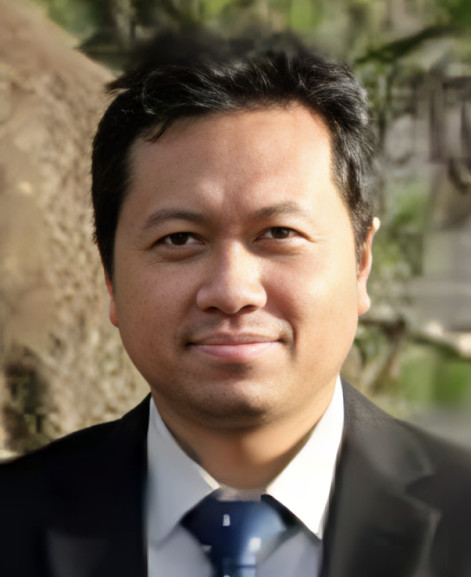
Biography: Adroit Fajar received his PhD in Applied Chemistry from Kyushu University in 2021 under the supervision of Professor Masahiro Goto. His doctoral work focused on green chemistry, particularly membrane and solvent technologies for resource recovery. He then received a postdoctoral fellowship from the Japan Society for the Promotion of Science (JSPS), during which he expanded his expertise from experimental green chemistry to computational chemistry and data-driven approaches, including density functional theory, molecular dynamics, COSMO-based modeling, machine learning, and deep learning.
In 2023, he joined the International Institute for Carbon-Neutral Energy Research (WPI-I2CNER) as an Assistant Professor and was appointed to lead the CESD Data Science Team. His current research focuses on data-driven materials design by integrating first-principles modeling, statistical thermodynamics, intelligent optimization, and generative AI, while keeping experimental validation in mind. In particular, his work emphasizes the autonomous discovery of organic molecules and inorganic crystals for carbon-neutral technologies.
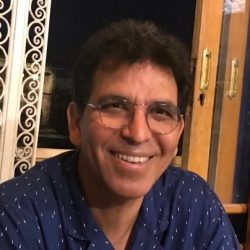
Biography: Hamid Gualous (M’14) was born in Morocco in 1967. He received the Ph.D. degree in electronics from the university Paris XI Orsay, France, in 1994. From 1996 to 2009, he was an Associate Professor at the University of Franche-Comte in FEMTO-ST laboratory, France. He is currently a Full Professor at the University of Caen Normandy and head of the energy storage systems team. His main research activities include energy storage device, energy management systems, fuel cell - hydrogen and smart grids.
Biography: Wu-Yang SEAN obtained his Ph. D in 2005 in University of Tokyo (Japan). From 2006-2013, he was a group head and responsible for developing industrial technologies such as green energy and electric vehicles in Industrial Technology Research Institute (ITRI) in Taiwan. The solid research achievements include 11 patents fired in Taiwan, China and US with strong team work. From 2013-2022, he joined Dept. of environmental engineering dept. in CYCU. His interests focus on meso-scale numerical modeling, energy saving of wastewater treatment plant and reuse of automotive lithium-ion battery. Now, he shift to Dept. of BIEM/NCHU in Taichung/Taiwan, and in charge of the development of energy-saving production of reclaimed water and system integration of agricultural machines. International students and collaborations are highly welcome in our laboratory.