Biography: Prof. Dr. Mohan Lal Kolhe is a full professor specializing in smart grids and renewable energy at the Faculty of Engineering and Science of the University of Agder in Norway, where he also holds the status of an IEEE Senior Member . As a leading renewable energy technologist with over three decades of international academic experience, he has previously held prestigious positions at global institutions including University College London (UK/Australia), the University of Dundee (UK), the University of Jyvaskyla (Finland), and the Hydrogen Research Institute in Canada . His distinguished career includes serving on the Government of South Australia’s first Renewable Energy Board (2009-2011) and acting as an expert evaluator for major research councils such as the European Commission, the Royal Society London, and the Engineering and Physical Sciences Research Council (EPSRC UK) . Recognized consistently from 2020 to 2023 by Stanford University’s matrices as being among the top 2% of scientists globally for his work in energy systems and electrical engineering, Professor Kolhe has also successfully secured competitive funding from bodies like the Norwegian Research Council and the EU, while his research interests span sustainable electrical energy systems, grid integration, electric vehicles, hydrogen technologies, and techno-economics

Biography: Prof. Zhijun Peng is a Professor at the School of Power and Energy at Northwestern Polytechnical University (NPU) in Xi‘an, China. With a Ph.D. from the National Engine Combustion Lab at Tianjin University, he has built a distinguished international career, having held professorial positions at the University of Lincoln and the University of Bedfordshire, as well as a senior development engineering role at Ford Motor Company. His interdisciplinary research lies at the intersection of thermodynamics, fluid dynamics, and combustion, applied to internal combustion engines, gas turbines, fuel cells, and sustainable energy systems. Recently, his work has focused on sustainable vehicle powertrains, non-carbon water transport technologies, and the integration of solar PV with thermal energy efficiency. Prof. Peng is a Fellow of both the Institution of Mechanical Engineers (IMechE) and the Royal Society of Chemistry (RSC). He has also contributed to the editorial leadership of several journals, including serving as an Associate Editor for Electronics Letters

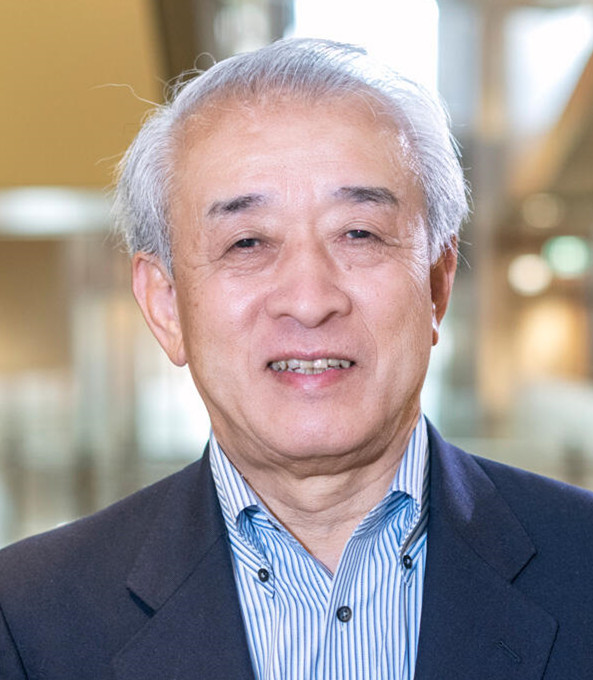
Biography: Dr. Masafumi Yamaguchi is now Professor Emeritus and Invited Research Fellow at the Toyota Technological Institute, Nagoya, Japan. He is the Chairman, PV R&D Review Committee under the NEDO (New Energy and Industrial Technology Development Organization): since 2008. He was the Research Supervisor of the “Creative Clean Energy Generation using Solar Energy” under the JST (Japan Science and Technology Agency): 2009-2017. Prof. Yamaguchi has contributed to R&D for high-efficiency multi-junction, Si tandem and Si solar cells, space solar cells, defects in semiconductors, PV-powered vehicle applications. He has received numerous awards such as The Becquerel Prize from the European Commission in 2004, The William Cherry Award from the IEEE in 2008, The PVSEC Award in 2011, The WCPEC Award in 2014, The Science and Technology Award by the Minister of Education, Culture, Sports, Science and Technology in 2015, the Outstanding Achievement Award from the Japan Society of Applied Physics in 2025 and the Purple Ribbon Medal from the Emperor in 2025 for his outstanding contributions to the development of science and technology of photovoltaics such as high-efficiency multi-junction solar cells, space solar cells, concentrator solar cells and as one of the world leaders of the development of photovoltaics and as one of the driving forces for international co-operation.
Speech title "Solar-powered Vehicle Applications toward the Creation of a Clean Energy Society"
Abstract-The
renewable energy is very important to create
clean energy society. Especially, the
photovoltaics (PV) is expected to contribute as
the primary energy with cumulative installed PV
with 5TW and 22TW by 2030 and 2050, respectively
according to the Shell’s Sky Scenario. However,
because global cumulative PV capacity installed
is only 2.8TW in the end of 2025, further
development of science, technology and
deployment of PV is necessary.
For realizing the above scenario and vision, we
need to conduct the following issues:
1.Development of high performance, low cost and
highly reliable PV materials, cells, modules,
and systems.
2.Development of new application fields such as
automobile applications towards the creation of
clean energy infrastructures.
The development of high-performance solar cells
offers a promising pathway toward achieving high
power per unit cost for many applications. Most
recently, the authors have achieved new world
record efficiency 33.7% with InGaP/GaAs/Si
tandem cell modules (775 cm2). The impacts of
high-efficiency solar cell modules upon
reduction in CO2 emission, charging cost of
electric vehicles and longer driving range of
vehicles are shown. The III-V/Si 3-junction
tandem solar cell modules have potential of
driving distance of more than 30 km/day average
and more than 50 km/day on a clear day.